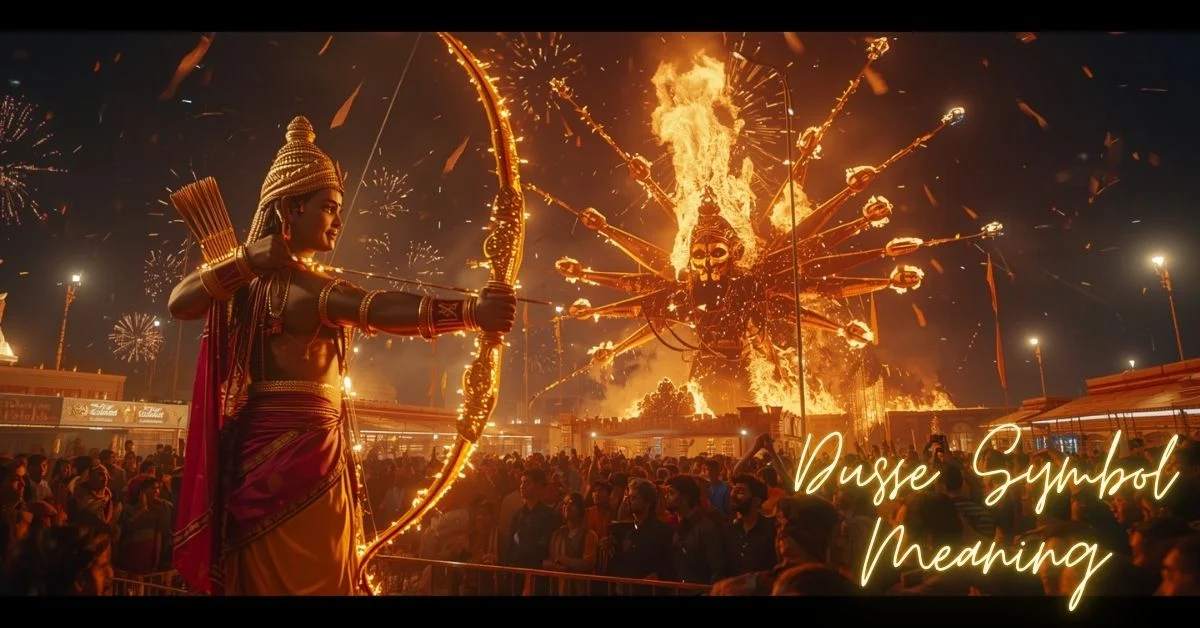
Have you ever come across the term “Dusse symbol meaning” and wondered what it actually represents? You’re not alone. Many people search for it while trying to understand spiritual signs, cultural traditions, or symbolic meanings connected to Dussehra (also spelled “Dussehra” or “Dasara”).
But here’s the interesting part — this symbol is not just about religion or tradition. It carries emotional depth, spiritual victory, and a timeless message about good winning over evil. In today’s fast-moving world, where stress and confusion are common, this symbol still speaks to the human heart in a powerful way.
Let’s break it down in a simple, meaningful, and real-life way.
What Does Dusse Symbol Meaning Actually Mean?
The Dusse symbol meaning is closely linked to the festival of Dussehra, which represents the victory of good over evil.
At its core, the symbol stands for:
- Victory of truth over lies
- Light over darkness
- Courage over fear
- Wisdom over ignorance
In many interpretations, the “Dusse symbol” reflects the burning of negativity, just like the burning of Ravana’s effigy during Dussehra celebrations.
It is not just a visual symbol — it is a spiritual reminder of inner strength and moral victory.
Deep Spiritual & Emotional Meaning of Dusse Symbol
Spiritually, the Dusse symbol meaning goes beyond tradition. It connects to inner transformation.
It teaches us that:
- Every human has both good and negative traits
- Real victory comes from controlling ego and anger
- Life becomes peaceful when negativity is released
Emotionally, it feels like a reset button. A reminder that no matter how heavy life gets, you can always rise above it.
Meaning in Love and Relationships
In love, the Dusse symbol meaning represents healing and emotional clarity.
It symbolizes:
- Letting go of toxic relationships
- Forgiving past mistakes
- Choosing honesty over illusion
- Building trust after conflict
Sometimes love becomes complicated, and this symbol reminds us that true love survives only when negativity is removed.
Symbolism Across Different Cultures
Although deeply rooted in Indian tradition, similar ideas exist in other cultures too:
1. Hindu Culture
Represents Lord Rama’s victory over Ravana — symbol of righteousness and dharma.
2. Buddhist Philosophy
Represents overcoming inner desires, ego, and attachment.
3. Western Spiritual Thought
Similar to “light conquering darkness” themes seen in Christian and philosophical teachings.
Across cultures, the message stays the same: goodness always wins in the end.
Emotional & Psychological Meaning
From a psychological point of view, the Dusse symbol meaning is very powerful.
It reflects:
- Mental cleansing
- Emotional release
- Overcoming fear and anxiety
- Building inner confidence
When people connect with this symbol, they often feel motivated to start fresh or make better life decisions.
What It Means If You Keep Seeing the Dusse Symbol
If you repeatedly see references or symbols related to Dussehra or Dusse symbolism, it may represent:
- A sign of personal transformation
- A reminder to let go of negativity
- A push toward self-improvement
- Inner calling for balance and clarity
It’s often seen as a wake-up call for emotional growth.
Dream Meaning of Dusse Symbol
Dreams involving Dusse symbols can have different meanings:
- Seeing burning effigies: End of problems or conflicts
- Celebration scenes: Success and happiness ahead
- Watching battles: Internal struggle between right and wrong
- Feeling peace in dream: Emotional healing is happening
Dreams like these often reflect your subconscious mind processing change.
Personal Insight: A Human Perspective
Many people don’t realize this, but the Dusse symbol meaning becomes deeply personal when life gets tough.
Think of a moment when you had to let go of anger, fear, or a painful memory. That feeling — when you finally choose peace over chaos — is exactly what this symbol represents.
It’s not just tradition. It’s a mirror of your own life journey.
What To Do If This Symbol Feels Meaningful to You
If you feel connected to this symbol, here are simple steps you can take:
- Reflect on what negativity you need to release
- Practice forgiveness (for yourself and others)
- Focus on personal growth
- Spend time in self-awareness or meditation
- Make decisions with clarity, not emotions
Small steps can create powerful inner change.
Real-Life Example
Ravi, a young professional, was going through constant stress at work and conflicts in relationships. During Dussehra, he attended a local celebration where he saw the burning effigy of Ravana.
That moment hit him deeply.
He realized he was carrying his own “Ravana” — anger, ego, and frustration. Slowly, he started working on himself, practicing patience and emotional control. Within months, his life felt lighter and more balanced.
That’s the real impact of the Dusse symbol meaning — it inspires transformation.
FAQs About Dusse Symbol Meaning
1. What is the Dusse symbol meaning?
It represents the victory of good over evil and removal of negativity.
2. Is it a religious symbol?
Yes, it comes from Hindu tradition but carries universal spiritual meaning.
3. What does it symbolize emotionally?
It symbolizes healing, strength, and emotional cleansing.
4. Why do people connect with it deeply?
Because it reflects real-life struggles and personal transformation.
5. Does it have dream significance?
Yes, it often symbolizes change, healing, and inner conflict resolution.
Final Thoughts
The Dusse symbol meaning is more than just a cultural idea — it is a life philosophy. It reminds us that every person has battles within, and every battle can be won with awareness, courage, and truth.
No matter where you are in life, this symbol carries a timeless message: you are stronger than your negativity.

Ava Ink is a passionate content writer and symbolism expert who specializes in explaining meanings behind symbols, signs, and visual language. She creates simple, clear, and user-friendly content that helps readers understand complex ideas in an easy way. Her work focuses on symbols, emojis, cultural meanings, and modern interpretations.